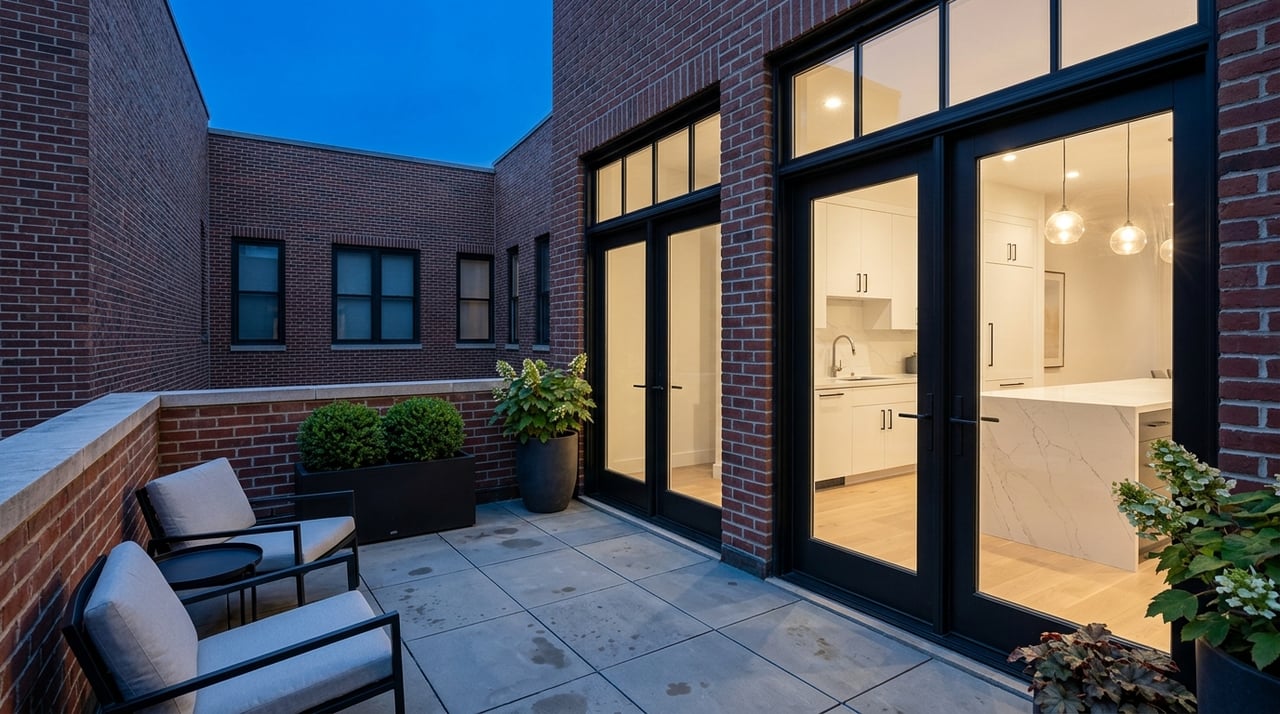
Thinking about trading extra rooms for a more connected lifestyle? Downsizing to Harvard Square can be a smart move if you want less space to maintain and more access to transit, dining, culture, and daily convenience. The key is knowing how to weigh the location premium, condo details, and lifestyle tradeoffs before you buy. Let’s dive in.
Why Harvard Square works for downsizers
Harvard Square appeals to many downsizers because it offers something a larger home often cannot: easy access to daily life. The area is known as a historic mixed-use district with bookstores, cafés, dining, theaters, public art, and steady neighborhood activity. If your goal is to simplify your home while staying connected to the city around you, that can be a meaningful shift.
Transit is a big part of the value. The Harvard Square MBTA Red Line stop sits directly across from Harvard Yard, and the neighborhood also supports bus access, bike use, and pedestrian-friendly routines. Redfin reports a Walk Score of 96 and a Transit Score of 80, which helps explain why many buyers here can rely less on a car.
That said, downsizing here is not just a space decision. It is a lifestyle decision. You are often paying more per square foot in exchange for convenience, energy, and access.
Budget for the full monthly cost
Harvard Square is a premium market, so your budget needs to go beyond the purchase price. Redfin data for the three months ending May 2026 shows a median sale price of $1,299,563 and a median sale price per square foot of $1.21K. The same report notes that homes sell in about 21 days and the market is highly competitive.
That competition matters if you are selling a larger home and trying to buy something smaller at the same time. A downsizing plan works best when you understand both your purchase budget and your timing strategy early. In a fast-moving area like Harvard Square, preparation can make a big difference.
Property taxes should also be part of your math. The City of Cambridge says the FY26 residential tax rate is $6.67 per $1,000 of assessed value. Using that rate, a home assessed at $1.3 million would imply about $8,700 per year in property taxes before exemptions, while a $1.5 million assessment would imply about $10,005 per year.
If the home will be your primary residence, Cambridge offers a residential exemption tied to owner occupancy. City tax materials say that this exemption reduced owner-occupied taxes by $3,170 in FY25. That can make a real difference, but you still want to look at the total carrying cost, not just the list price.
Condo fees deserve close attention
For many downsizers, a condo is the most natural fit in Harvard Square. A condo can reduce maintenance demands and make day-to-day living easier. But the monthly condo fee needs just as much attention as your mortgage and taxes.
Massachusetts guidance explains that condominiums are governed by master documents, deeds, bylaws, and Chapter 183A. Those documents cover common expenses, reserve funds, and assessments of unit owners. In simple terms, a lower-maintenance lifestyle may still come with meaningful monthly obligations.
When you compare properties, ask what the fee actually covers. A higher condo fee is not automatically a problem if the building is well run, reserves are healthy, and major systems are being maintained responsibly. A lower fee can look attractive at first, but it may not tell the full story if reserves are thin or deferred maintenance is building up.
Review condo documents carefully
In Harvard Square, condo due diligence is not paperwork to rush through. It is one of the most important parts of the purchase. The master deed, bylaws, budget, reserve provisions, and building rules all shape how the property functions after closing.
This is especially important if you have specific lifestyle needs. You may want to confirm rules around pets, parking, leasing, storage, or unit alterations before you commit. If you are downsizing for simplicity, the right building can support that goal. The wrong one can create friction.
Think of the documents as part of the asset itself. In a premium market, you are not just buying interior finishes. You are buying into the building’s financial structure, governance, and operating style.
Inspections still matter in condo purchases
It is easy to focus on a condo’s kitchen, light, or layout and assume a smaller home means fewer risks. That is not always true. Massachusetts says its residential home inspection protections apply to condo units within buildings of any size.
That means inspections still matter, even if the unit looks move-in ready. In older buildings, issues can be tied to roofs, plumbing, windows, or common mechanical systems rather than cosmetic details inside the unit. A polished interior does not always reflect the condition of the building as a whole.
For downsizers, this matters because unexpected repairs can undercut the simplicity you are trying to create. A careful review now can help you avoid surprise costs later.
Historic district rules can affect future plans
Harvard Square’s historic character is part of its appeal, but it can also come with limits. The Cambridge Historical Commission says the Harvard Square Conservation District is a mixed-use historic center of Cambridge, and projects in the district are reviewed individually. A certificate is required for work that needs a building permit.
If you may want to replace windows, adjust visible exterior elements, or make future updates, this is worth checking early. Not every property will be affected in the same way, but some buildings may have more restrictions than buyers expect. That can be perfectly manageable if you know it up front.
For many buyers, the tradeoff is worth it. The same historic character that may limit some exterior changes is also part of what makes the neighborhood feel distinct and enduring.
Parking can be a real deciding factor
One of the biggest benefits of Harvard Square is that you may not need to drive often. Between the Red Line, buses, and strong walkability, many errands and outings can happen without a car. For some downsizers, that is a major quality-of-life upgrade.
Still, parking should never be treated as a minor detail. Harvard University notes that visitor parking around Harvard Square is extremely limited, and the City of Cambridge maintains resident and visitor parking permit systems. If you plan to keep a car, make parking a must-check item from the start.
That means confirming whether a unit includes deeded parking, assigned parking, or no parking at all. It also means being honest about how often you truly drive. In Harvard Square, parking convenience can be worth paying for if it fits your routine.
Prioritize layout over raw square footage
The emotional challenge of downsizing is often not the number on paper. It is whether the new home will support your real daily habits. A smaller home can feel comfortable and freeing if the layout works well.
That is why features like elevator access, first-floor living, usable storage, guest flexibility, and a simple entry layout often matter more than total square footage. If you are planning for long-term ease, stairs and building access may matter just as much as finishes. In Harvard Square, those practical details can be worth prioritizing over size alone.
This is also where tradeoffs become personal. You may be happy to give up a formal dining room, but not willing to lose a true home office nook or easy guest space. The right downsizing move is not about shrinking as much as possible. It is about shrinking intelligently.
Timing your sale and purchase matters
If you are moving from a larger home into Harvard Square, your transition plan deserves real attention. In a competitive neighborhood where homes can move quickly, waiting too long to prepare can limit your options. A coordinated strategy can help reduce stress and keep you from making rushed decisions.
That may mean clarifying your must-haves before your search starts, understanding your likely sale timeline, and getting realistic about budget based on full monthly costs. Downsizing often sounds simpler than upsizing, but the logistics can still be complex when two transactions overlap. A clear plan helps you move with confidence.
A smart downsizing move starts with clarity
Downsizing to Harvard Square can be a great fit if you want to exchange space for convenience, transit, and a vibrant daily routine. The opportunity is real, but so are the tradeoffs around price, condo fees, parking, historic constraints, and layout. When you understand those factors clearly, you are much more likely to choose a home that feels right both now and later.
If you are weighing a move to Harvard Square and want a clear plan for buying, selling, or coordinating both, Moving Greater Boston can help you navigate the numbers, the timing, and the neighborhood details with confidence.
FAQs
How much smaller should you go when downsizing to Harvard Square?
- The right size depends less on the number of square feet and more on whether the layout supports your daily routine, storage needs, guest space, and accessibility goals.
Is elevator access worth paying more for in Harvard Square?
- For many downsizers, yes. Elevator access or first-floor living can improve day-to-day ease and may matter more over time than extra square footage.
What should you check in a Harvard Square condo fee?
- Review what the fee covers, the building’s reserve funds, budget strength, and any history of assessments, since monthly fees can strongly affect true affordability.
Do you need a car when living in Harvard Square?
- Not always. Harvard Square offers strong walkability, Red Line access, bus service, and bike access, but if you plan to keep a car, parking should be confirmed before you buy.
Can historic district rules affect Harvard Square renovations?
- Yes. If a property is in the Harvard Square Conservation District, some work may require review by the Cambridge Historical Commission before a building permit is issued.
Should you sell first or buy first when downsizing to Harvard Square?
- It depends on your finances, timeline, and risk tolerance, but in a competitive market, it helps to plan both sides of the move early so you can make decisions with less pressure.