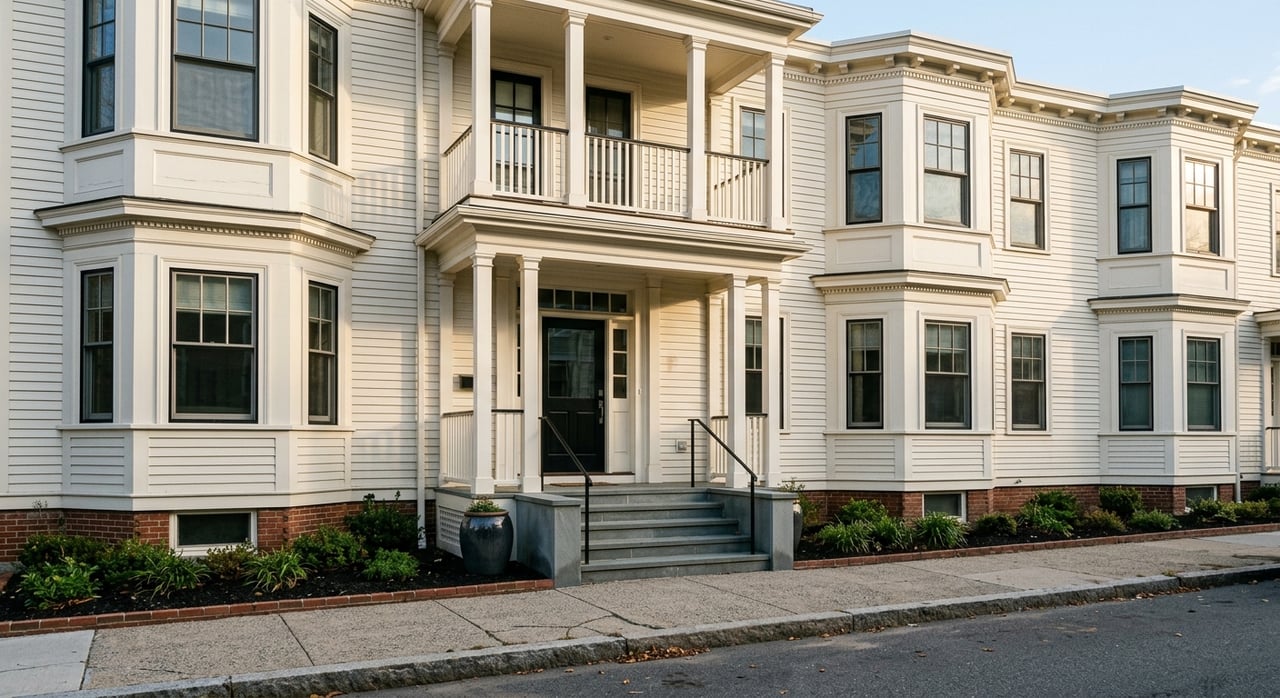
Buying your first home in East Boston can feel exciting, fast-moving, and a little overwhelming all at once. You are trying to learn prices, compare pockets of the neighborhood, and make smart decisions in a market where homes can move quickly. The good news is that with the right plan, you can approach the process with more clarity and confidence. Let’s dive in.
Why East Boston Draws First-Time Buyers
East Boston offers a mix of city access and distinct neighborhood identity that appeals to many first-time buyers. Boston planning materials note that the area is connected by the Blue Line, MBTA ferries, major tunnels, and surface roads, which makes getting to other parts of Boston more manageable.
The neighborhood also has several well-known commercial areas, including Maverick Square and Central Square. Planning materials identify additional important squares and corridors such as Day Square, Orient Heights Square, and Suffolk Downs Square, giving you several areas to explore as you narrow your search.
East Boston is also shaped by a diverse population and a broad range of households. According to Boston planning data, 47.6% of households are families, 40.7% of residents are foreign born, and 58.5% speak a language other than English at home.
What Homes Cost in East Boston
If you are budgeting for East Boston, expect most current pricing signals to land in the high-$600,000s. Recent 2026 market snapshots place the neighborhood in a similar range, but each source measures the market differently.
Zillow reported an average East Boston home value of $669,488 as of May 31, 2026. Redfin reported a median sale price of $669,775 for the three months ending May 2026, while Realtor.com reported a median listing price of $687,000 in May 2026.
The key takeaway is simple: treat these numbers as a working range, not one exact target. Your actual budget may need to move up or down depending on property type, condition, and location within East Boston.
How Prices Vary by Area
East Boston is not a one-price neighborhood. Realtor.com neighborhood data shows meaningful variation across sub-areas, which matters if you are trying to balance budget, transit access, and home style.
Here is a quick snapshot of reported neighborhood-level pricing:
| Area | Reported Price |
|---|---|
| Broadway | $499,000 |
| Eagle Hill | $614,950 |
| Central Maverick Square-Paris Street | $669,500 |
| Harbor View-Orient Heights | $699,999 |
| Jeffries Point | $715,000 |
| Waterfront | $1,595,000 |
In practical terms, lower-priced inland pockets may open the door for more first-time buyers, while waterfront-adjacent areas and highly transit-desirable locations may require a larger budget. That makes it especially important to define your price ceiling before you fall in love with a specific block or building.
What Competition Looks Like Right Now
East Boston is a competitive market. Redfin reports that homes receive about two offers on average and sell in around 35 days.
That pace is fast enough that preparation matters, but it is not so fast that you cannot be thoughtful. If you have your financing lined up, understand your must-haves, and know your target area, you will be in a stronger position when the right listing appears.
Start With a Clear Budget
Your roadmap begins with math, not showings. Before you tour homes, build a realistic monthly payment range that includes more than just principal and interest.
Consumer guidance cited in the research report recommends asking whether taxes, insurance, and other fees are included in the payment estimate. The same guidance says closing costs typically run about 2% to 5% of the home price, not including your down payment.
That means a first-time buyer looking around the high-$600,000 range should not focus only on the listing price. You also need room for closing costs, reserves, and any immediate post-closing expenses that may come with the home.
Get Preapproved Early
In a competitive East Boston market, preapproval is one of the first steps that can help you move with confidence. The research report notes that the CFPB recommends shopping around and asking at least three lenders for preapproval.
This gives you more than a loan estimate. It helps you compare payment scenarios, understand how different loan structures affect your monthly cost, and avoid wasting time on homes outside your real comfort zone.
Check Massachusetts Buyer Assistance Programs
If you are a first-time buyer, do not assume you need to do this alone. MassHousing states that eligible first-time buyers can receive up to $30,000 in down payment assistance with a MassHousing loan.
As of July 6, 2026, MassHousing had also announced a temporary $25,000, 0% deferred first-time homebuyer assistance option for qualifying loans locked between April 27 and July 31, 2026. Program details and eligibility matter, so this is the kind of option worth reviewing early in your planning.
MassHousing also recommends homebuyer education classes. Those classes can help you better understand affordability, credit, and what programs may be available to you.
Choose the Right Buyer Representation
Massachusetts has specific consumer guidance that matters for first-time buyers. The state says a buyer may want a broker who only represents the buyer’s interests, and licensed brokers and salespersons must provide a written consumer relationship disclosure at the first personal meeting about a specific property.
That is important because representation affects how advice is delivered throughout the transaction. As a buyer, you want clarity about who is representing you, what that relationship means, and how your interests are being protected.
Hire a Massachusetts Attorney Early
In Massachusetts, attorneys are a regular part of buying and selling property, both by law and by practice. State consumer guidance says hiring your own attorney may be in your best interest.
An attorney can help review the offer, purchase and sale agreement, mortgage documents, and closing documents. For a first-time buyer, that added layer of review can make the process feel much more manageable.
Protect Your Inspection Window
A fast market can make buyers nervous about losing out, but Massachusetts has important protections around inspections. The state’s residential home-inspection rules prohibit sellers and their agents from conditioning acceptance on waiving or limiting a home inspection, except in limited circumstances.
The state also says home inspections are generally recommended. If you are considering a home built before 1978, Massachusetts also says you should ask about lead risk.
This is one of the moments where patience helps. Even if a home looks great online or during a showing, your inspection period is part of how you learn more about the property before closing.
Compare East Boston Search Strategies
When you start touring, it helps to organize your search around how you want to live day to day. Based on Boston planning materials and East Boston’s layout, many first-time buyers can simplify the process by comparing three broad search paths.
Transit-Core Search
This approach focuses on areas around major squares and established commercial areas such as Maverick Square and Central Square. If easy access to the Blue Line, daily errands, and a more active street pattern are high priorities, this may be where you start.
Waterfront or Near-Waterfront Search
This path may include places like Jeffries Point or parts of the Waterfront. These areas can come with higher pricing, but they may appeal to buyers who want proximity to the harbor or a stronger waterfront setting.
Residential Search Farther From Squares
This route may lead you to explore more residential sections identified in planning materials, such as Orient Heights, Harbor View, Belle Isle Peninsula, or parts of Eagle Hill and Paris Flats. Depending on the listing and exact location, this can be a useful strategy if you want to stretch your budget beyond the busiest nodes.
Understand Coastal and Flood Risk
Because East Boston is one of Boston’s coastal neighborhoods, risk review is an important part of due diligence. Boston’s coastal resilience planning includes East Boston, and the city says the Border Street waterfront is vulnerable to coastal flooding.
Boston also says flood risk is increasing as sea levels rise and storms intensify. According to the city, FEMA flood zones with a 1% annual chance of flooding imply roughly a 1-in-4 chance over a 30-year mortgage.
That does not mean you should rule out coastal areas automatically. It does mean you should review flood exposure carefully before closing and make sure you understand what it could mean for insurance, long-term planning, and your comfort level with the property.
Review Title and Closing Details Carefully
As you get closer to the finish line, details matter. The research report notes that title insurance is not required in Massachusetts, but the state says buyers may want to consider it.
This is another area where your attorney and buyer representative can help you stay organized. A smooth closing often comes down to reviewing documents early, asking questions quickly, and avoiding last-minute surprises.
A Smart First Move in East Boston
Buying your first home in East Boston is easier when you break the process into clear steps. Start with budget and preapproval, review Massachusetts assistance options, build the right support team, protect your inspection rights, and stay alert to coastal risk as you compare locations.
East Boston offers a wide range of price points, neighborhood settings, and access patterns within one Boston neighborhood. If you want a local team that can help you compare the options, move quickly when the right home appears, and keep the process clear from start to finish, connect with Moving Greater Boston.
FAQs
What is the typical home price range for first-time buyers in East Boston?
- Recent 2026 market snapshots place East Boston generally in the high-$600,000 range, with reported figures including about $669,488 in average home value, $669,775 median sale price, and $687,000 median listing price.
How competitive is the East Boston housing market for first-time buyers?
- Redfin reports that East Boston is a very competitive market, with homes receiving about two offers on average and selling in around 35 days.
What East Boston areas should first-time buyers compare?
- A simple framework is to compare a transit-core search around places like Maverick Square and Central Square, a waterfront or near-waterfront search such as Jeffries Point, and a more residential search in areas farther from the main squares.
What Massachusetts assistance programs can first-time buyers explore?
- MassHousing says eligible first-time buyers may qualify for up to $30,000 in down payment assistance with a MassHousing loan, and it also announced a temporary $25,000, 0% deferred assistance option for certain qualifying loans in 2026.
Do first-time buyers in Massachusetts need an attorney?
- Massachusetts says real estate attorneys are a regular part of buying and selling property in the state, and state consumer guidance says hiring your own attorney may be in your best interest.
What should first-time buyers know about inspections in East Boston?
- Massachusetts says home inspections are generally recommended, and current state rules prohibit sellers and their agents from conditioning acceptance on waiving or limiting a home inspection except in limited circumstances.
Why should East Boston buyers review flood risk before closing?
- Boston includes East Boston in its coastal resilience planning, says flood risk is increasing, and notes that Border Street is vulnerable to coastal flooding, so buyers should review flood exposure carefully during due diligence.