"I hope people experience it as a special restaurant," said Will Beckett, who co-founded London's Hawksmoor steakhouse group in 2006, about the chain's first Boston location. "And I don't just mean for special occasions, but even as just a great neighborhood restaurant."
That's an unusual ambition for a nearly 280-seat import with fourteen locations spread across the UK, Ireland, and the United States. But it's the right instinct for the block it's landing on. Fort Point's oldest institution is a nonprofit that has spent decades insisting its warehouses belong to working artists, not spectators. This fall, both identities are true on the same six blocks in the same six weeks. Hawksmoor opens its doors at 15 Necco Street on September 8. A little over five weeks later, more than 110 painters, sculptors, and printmakers throw their own doors open a few hundred feet away, for a weekend that has been running since 1980, long before anyone here was pouring negative-two-degree martinis.
Two Calendars, One Zip Code
Fort Point residents already know the neighborhood carries two identities: the artist enclave and the restaurant destination. What's easy to miss is how tightly those two calendars have started to overlap in actual geography and actual weeks, not just in marketing copy. Hawksmoor's opening week and the run-up to Fort Point Open Studios now sit back to back on the same fall calendar, inside a footprint you can walk in fifteen minutes. Necco Street to A Street to Melcher Street covers most of it.
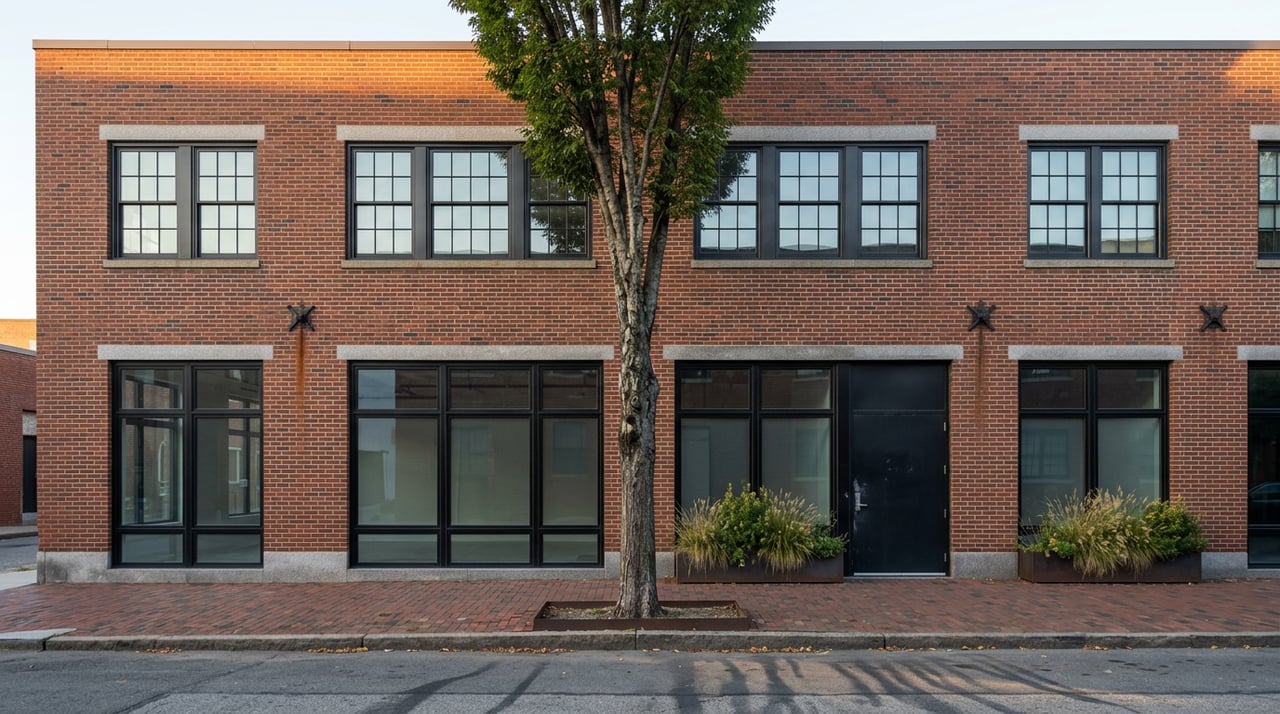
That proximity isn't accidental. Fort Point Open Studios, organized every year by the Fort Point Arts Community, will run October 16 through 18 this year, its 46th installment since FPAC pioneered the open-studios format in Greater Boston in 1980. The buildings on the tour, including the FPAC Art Space at 70A Sleeper Street, the Artist Building at 300 Summer Street, the 249A Street cooperative, and Midway Artist Studios on Channel Center Street, sit within blocks of Hawksmoor's new dining room and Celine's still-dark space at 324 A Street. Two economies, one map.
What Actually Landed, and What's Still Landing
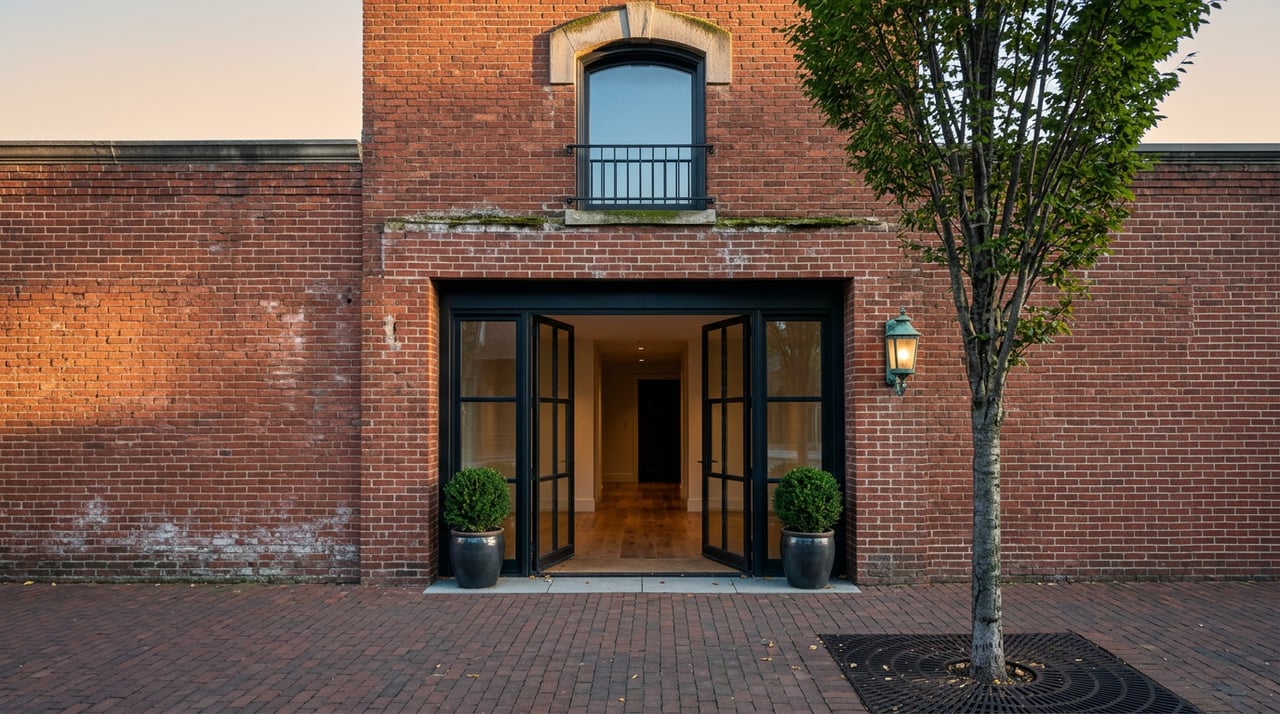
Hawksmoor is the headline. The Boston location marks the chain's 15th worldwide and its first in New England, led by executive chef Thomas Park, previously of Saltie Girl. The Fort Point menu leans into both halves of its identity: Hawksmoor's signature dry-aged, charcoal-grilled steaks alongside a Fort Point burger, beer-battered Massachusetts haddock with mushy peas, and a Fluffernutter Sundae that nods at the neighborhood rather than London. The building itself, the Platinum LEED-certified 15 Necco Street, gives the restaurant a terrace overlooking the Fort Point Channel, the same water the artist buildings back onto a few blocks away.
Celine was supposed to arrive first, and its path here is a good example of why local sourcing beats a press release. Coda Restaurant Group, the team behind SRV, Baleia, Gufo, and the Salty Pig, announced back in March that its Montréal-inspired tavern would take over the former Blue Dragon space at 324 A Street with a late-summer opening. Company CEO Deirdre Auld described the concept as a room that's "fun, craveable, talented" rather than fine dining. But the Fort Point Neighborhood Association's own blog, which tracks liquor license requests and construction updates block by block, noted in mid-August that Celine skipped its scheduled presentation at that month's meeting. That's the kind of detail that only shows up if you're reading neighborhood association minutes instead of a restaurant group's announcement, and as of this writing, the space at 324 A Street is still dark while Hawksmoor's is about to open on schedule two blocks away.
Trillium, already an established anchor in the neighborhood, isn't sitting still either. At the Fort Point Neighborhood Association's April 28 gathering, Trillium asked for the group's support on a patio expansion, on the same agenda as a briefing on turning 320 Summer Street's office space into apartments and an update on July's Sail Boston tall ships event. One meeting, three completely different kinds of neighborhood change, all discussed in the same two hours at the Community Work Lounge on Necco Street.
The Weekend That Started All This in 1980
Open Studios isn't a response to the restaurant boom. It predates it by four decades. FPAC's own history credits Fort Point artists with introducing the open-studios format to Greater Boston that year, when a handful of painters and sculptors who'd moved into the neighborhood's emptying warehouses for cheap rent decided to let the public in. The event has run every October since, and this year's edition keeps the same rhythm: Friday, October 16, from 4 to 7 p.m., then Saturday and Sunday from noon to 6 p.m., across the same cluster of artist buildings that have hosted it for years.
The galleries don't wait for October to have something worth seeing. The Gallery at 249A opened a two-artist show, Oil and Water, featuring paintings and drawings by Dan Osterman and Bruce Rogovin, in July. A few days later, FP3 Gallery, in the same 249A Street building, opened Informed Choices, a collection of Michael Bourque's mark-making paintings. Neither show was timed to Open Studios. They're evidence that the gallery circuit here runs year-round, with October as its biggest weekend rather than its only one.
One Saturday, Two Economies
If you're planning a weekend around both halves of the neighborhood this fall, the geography makes it easy:
- Start at the Gallery at 249A on A Street to see current work before the Open Studios crowds arrive in October.
- Walk the few blocks to Midway Artist Studios on Channel Center Street, one of the four buildings on this year's tour.
- Loop past Trillium's taproom at 50 Thomson Place, whose patio may look different by next summer if the expansion request goes through.
- Check whether Celine has finally opened at 324 A Street, and book ahead for Hawksmoor's Sunday roast on Necco Street once its September opening settles in.
None of these stops require a car. Congress Street, Sleeper Street, and A Street are mid-reconstruction right now, with the city widening sidewalks and adding curb ramps as part of a safety redesign that followed the death of a child, Gracie Gancheva, on Sleeper Street in March 2024. The project held its pre-construction meeting in January 2026 and is aimed squarely at the kind of foot traffic this fall's calendar is about to generate between the galleries and the restaurants.
Why the Neighborhood Association's Agenda Reads Like This Now
None of this is coincidence dressed up as a trend piece. It's what happens when a single neighborhood association meeting has to hold a brewery's patio request, an office-to-residential conversion, a tall ships update, and a briefing on a FIFA fan zone on the same page. Fort Point's civic calendar looks eclectic because the neighborhood itself now runs several different economies on the same six blocks at once, and the people who show up to FPNA meetings are the ones deciding how those economies share sidewalk space, parking, and quiet hours.
That's the real story underneath the restaurant headlines. Fort Point isn't trading its identity as an artist colony for a new one as a dining destination. It's running both, in the same buildings, on overlapping calendars, and asking its own residents to weigh in on how that works in practice, one FPNA gathering at a time.
If you're watching this neighborhood closely, whether you live here already or you're weighing what a move into Fort Point or a nearby waterfront block might look like, Moving Greater Boston tracks these same neighborhood-level shifts every week. Reach out to buy with us or sell with us, and let's talk about what's actually changing on your block.